Five David Byrne performances that prove he’s out of everyone’s league
One of a kind.


Born on May 14th, 1952, in Dumbarton, Scotland, David Byrne is a multifaceted artist whose innovative work has left an indelible mark on music, film, visual art, and performance. Best known as the founder and frontman of the influential band Talking Heads, Byrne’s creative journey has continuously pushed the boundaries of artistic expression.
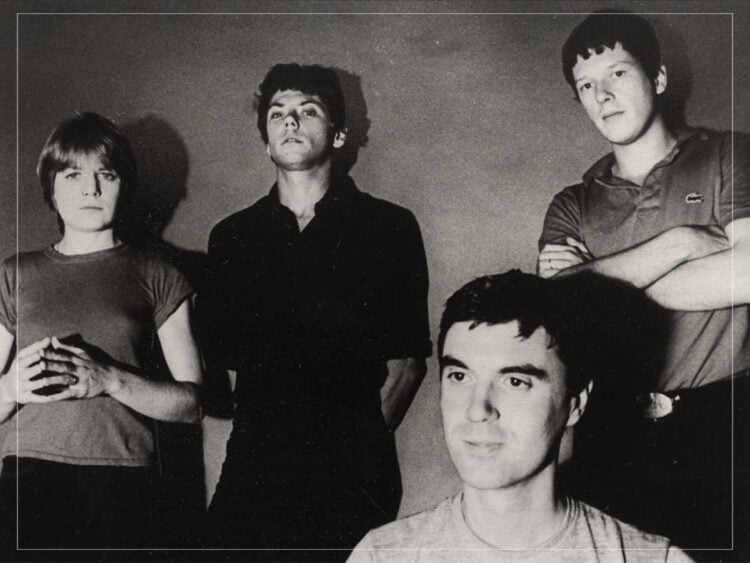
Byrne’s family relocated to Baltimore, Maryland, when he was a child, and it was during his time at the Rhode Island School of Design (RISD) in the early 1970s that he began to explore his passion for music. In 1974, he formed Talking Heads with Chris Frantz, Tina Weymouth, and Jerry Harrison. The band’s debut album, ‘Talking Heads: 77’ (1977), marked the beginning of a remarkable career characterised by a unique blend of art rock, punk, and new wave.
With Byrne as the band’s charismatic lead singer and primary lyricist, Talking Heads released a series of critically acclaimed albums throughout the late 1970s and ’80s, including ‘More Songs About Buildings and Food’ (1978), ‘Fear of Music’ (1979), and ‘Remain in Light’ (1980). Their music was characterised by Byrne’s quirky lyrics, innovative percussion, and a fusion of world music influences, particularly African rhythms.
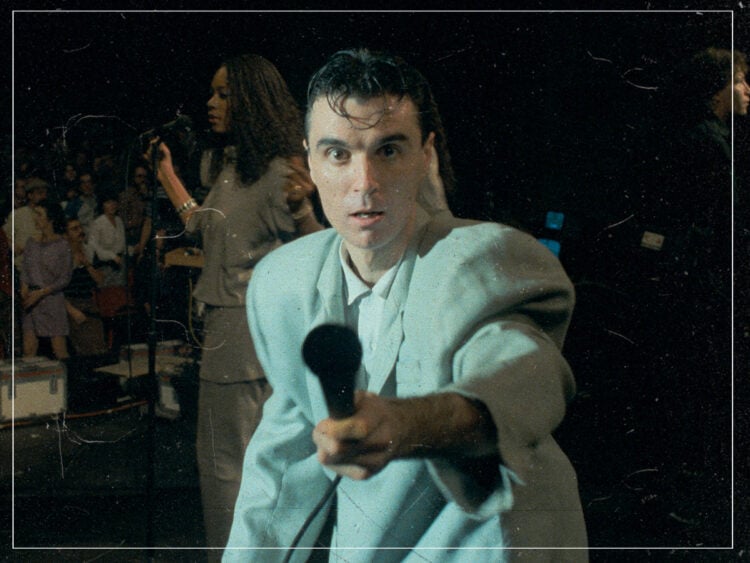
The groundbreaking concert film ‘Stop Making Sense’ (1984), directed by Jonathan Demme, captured the band’s dynamic stage presence and became a seminal work in the genre. The Talking Heads’ hit songs, including ‘Burning Down the House’ and ‘Once in a Lifetime’, became anthems of the era.
Byrne’s creative pursuits extended beyond music. In the 1980s, he delved into theatre with the influential stage production ‘The Catherine Wheel’ and later collaborated with choreographer Twyla Tharp on the dance project ‘The Catherine Wheel’ (1981). His interest in world music and cultures led to the creation of the album ‘My Life in the Bush of Ghosts’ (1981), a groundbreaking collaboration with Brian Eno.
Beyond music, Byrne’s fascination with the intersection of art and technology led to projects like ‘Playing the Building’ (2005), an installation that turned a New York City building into a musical instrument. He also ventured into filmmaking with ‘True Stories’ (1986) and ‘This Must Be the Place’ (2011).
David Byrne’s artistic contributions are marked by their innovation, diversity, and thought-provoking content. His collaborations with artists from various disciplines have enriched the cultural landscape, and his dedication to pushing creative boundaries has earned him a place as a true visionary in the world of art and music. Whether through his music, visual art, or performance, David Byrne continues to inspire and challenge audiences to see the world in new and unconventional ways.
Jupitus could not see the stage due to fans being told to dance.
“Love and kindness are a form of resistance”.
“I just have an intuitive sense…”
Not the kindest advice he’s ever given.
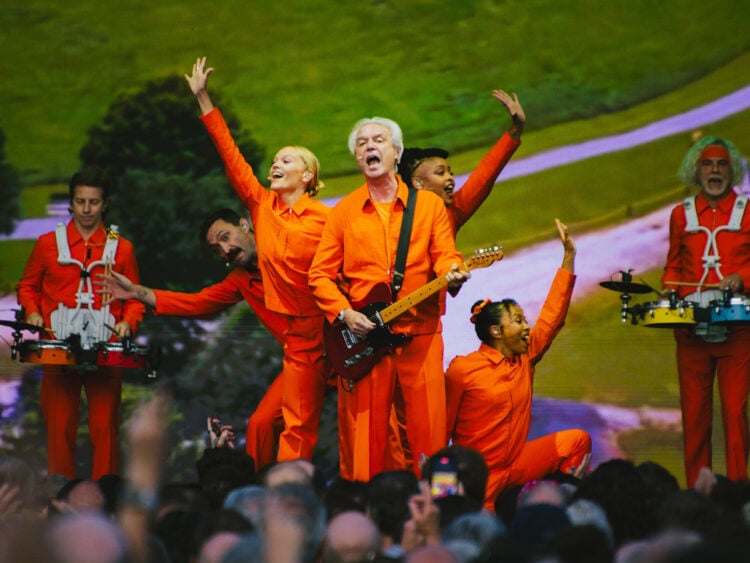
Byrne has been making this point on his current tour.
“I hope to eventually make another film.”